

The battery is the heart of your Tesla, and there's quite a bit to know about it. What affects the range? How can you conserve battery power? And what exactly is regenerative braking?
The answer to these and more questions You can get it here Clearly summarized.
Tesla range
Whether it's a Tesla Model Y or a Tesla Model S: range is the key term when it comes to the battery. It indicates the maximum distance you can drive before needing to recharge. This is always an estimate, as the actual range depends on many factors.
Whether you drive in a sporty or restrained manner, whether you have large performance rims or aerodynamically advantageous aero rims, whether the car is heavily loaded or almost empty – all of this plays a role.
The weather also has a major influence: In winter Does the battery suffer from the cold temperatures? hot summer days Air conditioning uses a lot of energy. This can be improved, for example, by using a suitable [product/service/etc.]. sun protection That saves quite a bit of battery power.
Important: The displayed range or battery charge level actually represents the maximum; unlike a combustion engine vehicle, there is no "fuel reserve". Therefore, find a charging station at the latest when the battery level reaches 10%, and always plan for approximately 50 kilometers less range than displayed to be on the safe side.
Tesla fuel consumption per 100 km
All of this makes it sound as if the consumption of electric cars isn't particularly impressive. But far from it: Even the large, heavy Tesla Model X Maximum Range only consumes between 20 and 25 kWh/100 km, which, depending on the comparable engine, corresponds to between 3 and 5 liters of gasoline.
The consumption figures for all Tesla models are given by the car manufacturer with the following average values:
- Tesla Model S consumption: 19 kWh/100 km
- Tesla Model 3 base version consumption: 14.9 kWh/100 km
- Tesla Model X consumption: 22.6 kWh/100 km
- Tesla Model Y consumption: 16.9 kWh/100 km
Under vehicle —> You can book trips for your Display current consumption.
Tesla recuperation
However, there is also a way to "regain" reach. The so-called Recuperation It transforms your Tesla's electric motor into a generator to feed energy back into the battery when braking and driving downhill – a significant efficiency advantage over combustion engines.
Protecting Tesla battery
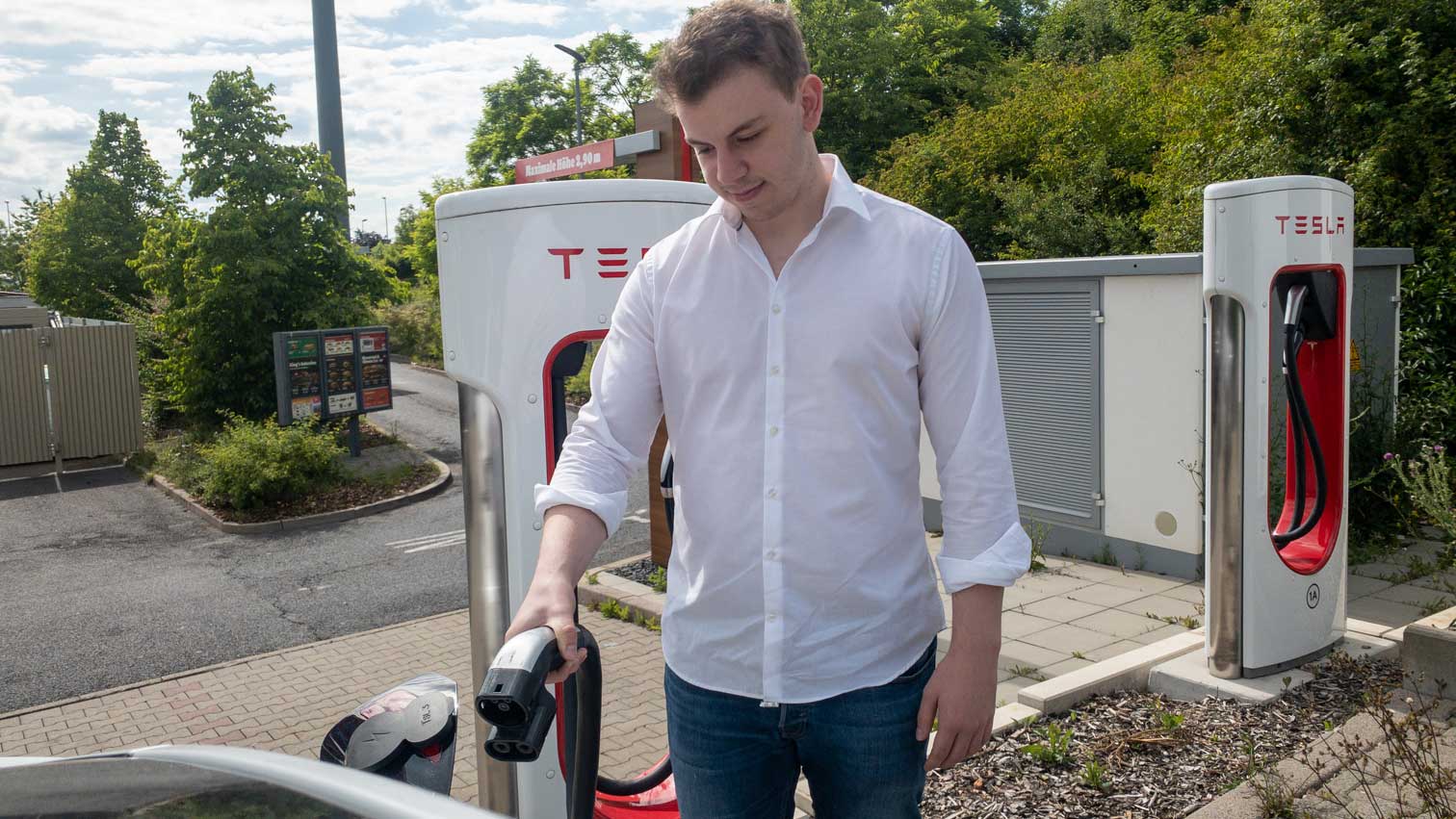
Another special feature of electric cars: Due to chemical processes, the battery capacity decreases over the years. So, in order to still have power even after... 100,000 kilometers To maximize your range, you should conserve your battery. It is recommended to keep the battery level between 20 and 80% whenever possible (i.e., avoid fully charging it) and to use a home wallbox rather than fast charging stations.
The exception is the LFP batteries recently installed in the Tesla Model 3 with the shortest range, which can also be regularly charged up to 100 % can load.
Source of featured image: Jeffrey Correa via Unsplash

1 Comment
Moser Tom
Zurück in die Steinzeit: ich muss mich also warm anziehen und im Sommer das Auto vor Hitze schützen? Damit ich auf eine Reichweite komme, die einen Drittel meines ‚schmutzigen‘ Skoda Von vorher entspricht? Echt jetzt? Das ist ihre Empfehlung?? Na dann: gute Nacht!
Zurück in die Steinzeit: ich muss mich also warm anziehen und im Sommer das Auto vor Hitze schützen? Damit ich auf eine Reichweite komme, die einen Drittel meines ‚schmutzigen‘ Skoda Von vorher entspricht? Echt jetzt? Das ist ihre Empfehlung?? Na dann: gute Nacht!