
Tesla offers three different packages for its Autopilot – Basic, Enhanced, and FSD – each with varying features. While Basic Autopilot comes standard, the other two packages come at a significant additional cost.
So what is the difference that justifies the price? And is the most expensive package worth it?
Tesla Autopilot: Differences between the packages
The one installed in all Teslas Basic Autopilot In addition to essential safety features such as the emergency brake assist, it primarily has two functions: the adaptive cruise control, which is essentially a cruise control that also maintains distance to vehicles in front, and the steering assist, which can steer itself when the lane guidance is clearly visible.
While this is already part of the paid upgrades at many other manufacturers, it's just the beginning for Tesla.
The package "Enhanced AutopilotFor an additional €3,800, the system offers a wide range of extra features. These include lane change assist, which automatically changes lanes when the turn signal is activated, and the "Navigate on Autopilot" beta feature, which can automatically navigate through highway on-ramps, off-ramps, and interchanges. "Autopark" provides parking assistance, and "Summon" allows the vehicle to autonomously park itself within a certain radius and navigate back to the owner.
For those who want even more, the [option] is available for €7,500. Full Self-Driving Package Purchase an upgrade that adds a traffic and stop sign assistant to the functionality. This recognizes traffic lights and stop signs and automatically brakes the vehicle. Tesla also promises buyers of this package a steering assist feature for city driving in the near future.
What is actually possible in Germany?
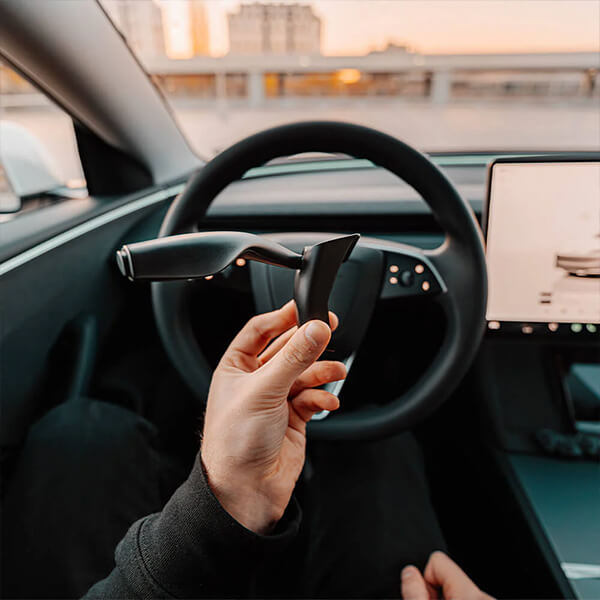
Many of these features sound great – but are they even allowed to be used in Germany, where regulations are far stricter than in the production country, the USA? In principle, yes, but under one important condition: all autopilot packages are classified as "Level 2 Autonomous Driving" and therefore as driver assistance systems, which means the driver must keep their hands on the steering wheel and be ready to intervene at any time.
Tesla also points out this fact several times in the fine print.
Is it worth buying?
Under these circumstances, is purchasing the additional packages even worthwhile? After all, what good is traffic light recognition if you still have to constantly pay attention? The answer to these questions also depends on how you primarily use your Tesla. For those who generally only drive short distances, the Basic Autopilot with adaptive cruise control is perfectly adequate. While the automatic parking feature of the next most expensive Enhanced Autopilot (EAP) is certainly a nice-to-have, it's ultimately more of a gimmick that most people will rarely use.
Many of the truly useful features of EAP only work on highways and expressways anyway. There, they are quite helpful and make the journey more relaxed and less tiring. So, for those who frequently travel long distances on such routes, the extra cost can be worthwhile.
Paying an additional €3,700 for the Full Self-Driving (FSD) package probably doesn't make sense for most people. Currently, you only get the traffic and stop sign assist, as well as the prospect of the City Assist. Furthermore, you'll likely be among the first to receive future developments. However, nobody knows what those developments will be or how useful they will be.
Currently, FSD is only an option if you absolutely want everything that's technically possible. Those who are tech-savvy and want to experience Tesla's best current technologies will certainly enjoy the FSD package.
2 Comments
grease
Als Antwort auf diese Frage sei kurz gesagt:
Eine Rückfahrkamera ist in allen Tesla Modellen verbaut. Beim Rückwärts einparken hat man zusammen mit den Kameras an den Kotflügeln nach hinten filmen, dennoch eine perfekte Übersicht.
Radar oder Ultraschallsensoren seit Ende 2022 nicht mehr. Seit Dezember 23 gibt es aber für alle Modelle ohne Ultraschall und Radar Sensoren eine neue Einparkhilfe, die mittels Kameras die Umgebung als eine Art volumetrische 3D Voxel Cloud in Echzeit auf dem Bildschirm abbildet. Diese Anzeige ist ziemlich genau und hilft beim Einparken in sehr engen Situationen sehr.
Als Antwort auf diese Frage sei kurz gesagt:
Eine Rückfahrkamera ist in allen Tesla Modellen verbaut. Beim Rückwärts einparken hat man zusammen mit den Kameras an den Kotflügeln nach hinten filmen, dennoch eine perfekte Übersicht.
Radar oder Ultraschallsensoren seit Ende 2022 nicht mehr. Seit Dezember 23 gibt es aber für alle Modelle ohne Ultraschall und Radar Sensoren eine neue Einparkhilfe, die mittels Kameras die Umgebung als eine Art volumetrische 3D Voxel Cloud in Echzeit auf dem Bildschirm abbildet. Diese Anzeige ist ziemlich genau und hilft beim Einparken in sehr engen Situationen sehr.
Ronald Gneiting
Hallo Herr Kopp,
dank für die Beschreibung der verschiedenen Autopilot Pakete. Aber wenn ich es richtig verstehe, beinhaltet das Basic Paket weder eine Rückfahrkamera noch Frontsensoren (Radar, Ultraschall), so dass man beim Einparken quasi wie in alten Zeiten “blind” ist. Das ist für mich eigentlich heute eine Selbstverständlichkeit und wäre für mich bzgl. Kauf des neuen M3 ein Ko-Kriterium. Haben Sie auch Info zum neuen M3 was genau am Fahrwerk geändert wurde. Ich frage deshalb, weil die alten M3 und MY doch erhebliche Probleme mit Lagerspiel, Achsschenkel etc. beim TÜV haben.
Gruß
Ronald Gneiting
Hallo Herr Kopp,
dank für die Beschreibung der verschiedenen Autopilot Pakete. Aber wenn ich es richtig verstehe, beinhaltet das Basic Paket weder eine Rückfahrkamera noch Frontsensoren (Radar, Ultraschall), so dass man beim Einparken quasi wie in alten Zeiten “blind” ist. Das ist für mich eigentlich heute eine Selbstverständlichkeit und wäre für mich bzgl. Kauf des neuen M3 ein Ko-Kriterium. Haben Sie auch Info zum neuen M3 was genau am Fahrwerk geändert wurde. Ich frage deshalb, weil die alten M3 und MY doch erhebliche Probleme mit Lagerspiel, Achsschenkel etc. beim TÜV haben.
Gruß
Ronald Gneiting