
A creaking noise when steering can spoil any drive in a Tesla. Fortunately, in most cases, it's not an unsolvable mystery, but rather clearly identifiable components – and equally clear solutions.
This guide will show you how to systematically narrow down the source of the cracking noise, what the typical causes are, and which repair methods have proven effective.
Tesla steering wheel creaking: Recognize the first signs
Pay close attention to this when and where the cracking sound occurs:
-
Only when stationary and turning the steering wheel?
-
When starting off or at low speeds?
-
Only when the steering wheel is fully turned left or right?
-
More in the middle or slightly offset at the front?
Tip: Record the sound with your smartphone – this way you can clearly demonstrate it to Tesla service later.
Quick checks to get started
With just a few simple steps, you can quickly rule out harmless causes:
-
Wheel nuts Check with a torque wrench (175 Nm) – approx. 5 minutes
-
Tire pressure & Rim seat Check – approx. 10 minutes
-
Visually inspect the chassis (Rubber, stabilizer links, tie rods) – approx. 10 minutes
-
Steering wheel game Gently rock the car back and forth between the left and right sides for about 2 minutes.
Common causes
-
steering gearCracking noise during load changes, often noticeable in the interior – replacement is usually necessary.
-
wishbone & strut mountTemperature-dependent creaking/cracking; often only greasing or replacement helps.
-
Tie rod ends: Short click when changing direction; replace when playing.
-
Drive shafts (CV joints)Rhythmic cracking noises when cornering under load; check the CV boots.
-
Wheel bearing/wheel hub: Dull cracking sound with vibrations; diagnosis only possible on a lifting platform.
Diagnosis step by step
If you would like to do it yourself:
-
Safely lift the vehicle – always use suitable jack pads to protect the battery (e.g., from the Teslabs shop).
-
Spin the wheels freely and provoke a noise (a second person at the steering wheel is helpful).
-
Use a mechanic's stethoscope to "listen" to components such as steering gear, control arms or bearings.
-
Spray the rubber bearings with silicone grease as a test – if the cracking disappears, the part is suspect.
-
Check tie rods, control arms and steering column for play.
No lift available? In many cities, car repair shops offer car lifts by the hour.
Frequent repairs
| Caused | Solution | Cost* | Time |
|---|---|---|---|
| Steering gear worn out | Replacement + wheel alignment | 1,000–1.600 € | 3–6 h |
| Upper control arm | Replacement (optimized aluminum version) | €350–450 | 2 h |
| tie rod end | Exchange on both sides | €200–300 | 1 h |
| strut mount | grease or replace | €150–250 | 2 h |
| CV joint | Replacing the drive shaft | €600–900 | 2–3 h |
*Guideline values; often free of charge under warranty.
Tesla service or independent garage?
-
Is the warranty still valid? Schedule an appointment in the Tesla app and attach an audio recording.
-
Smaller jobs The mobile Ranger also takes over functions such as wishbones or tie rods.
-
No more warranty? An independent EV repair shop with Tesla experience is often cheaper.
prevention & Care
-
Check the suspension and lubricate the strut mounts once a year.
-
Always retighten wheel nuts to 175 Nm – even after changing tires.
-
Regularly protect control arm bushings against corrosion with silicone spray.
-
Perform a visual inspection after each contact with the curb.
Accessory tip from the Teslabs shop
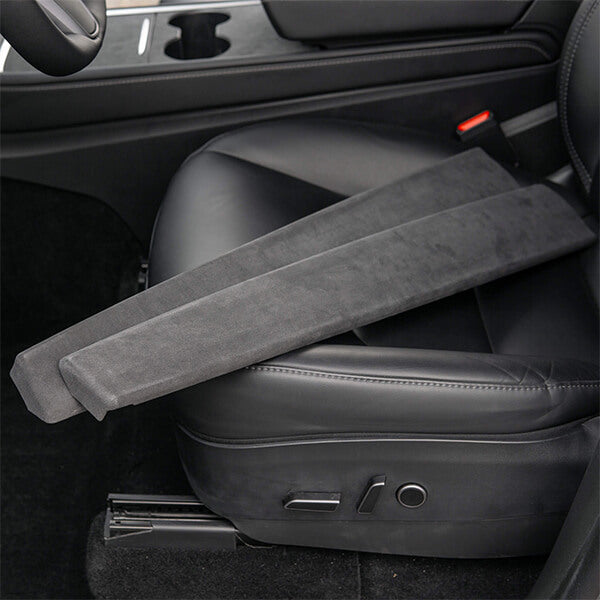
If you want to change tires yourself or lift your vehicle: Protect the battery with our perfectly fitting Jack padsThe set fits securely and distributes the load optimally – so that nothing is damaged when lifting.
Have you also experienced cracking noises in your Tesla? Feel free to share them in the comments.