
Clear visibility is safety. It's all the more frustrating, then, when you activate the washer lever in your Tesla and only a meager drop – or nothing at all – appears on the windshield. The good news: In most cases, the problem can be solved yourself in just a few simple steps.
This is how the Tesla windshield washer system works
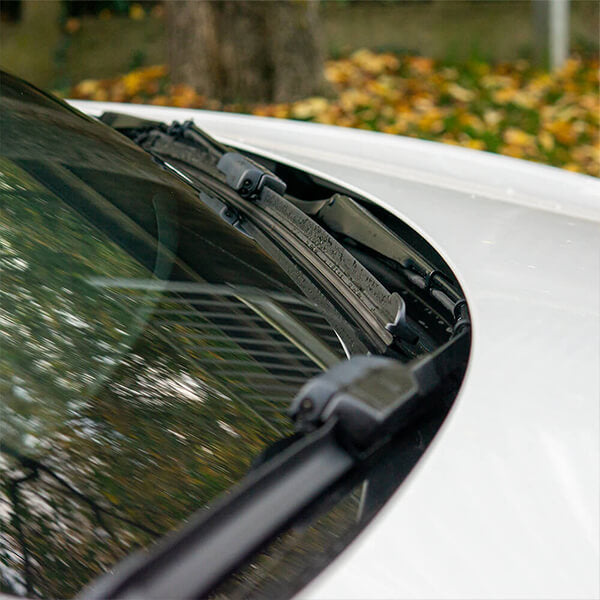
In Tesla vehicles, the windshield washer fluid is not sprayed onto the windshield via nozzles as usual, but is fed directly above the wiper blades – in short pulses, whenever the blade reaches the bottom.
This method prevents streaks in the middle of the windshield and ensures that following vehicles are not splashed. Anyone expecting a powerful jet of water will therefore be initially surprised.
If you suspect a specific defect, you can follow these steps.
Quick Check 1: Rule out operator error
| Test step | Result | Next step |
|---|---|---|
| Did you really pull and hold the lever all the way to the second pressure point? | No | > operate correctly |
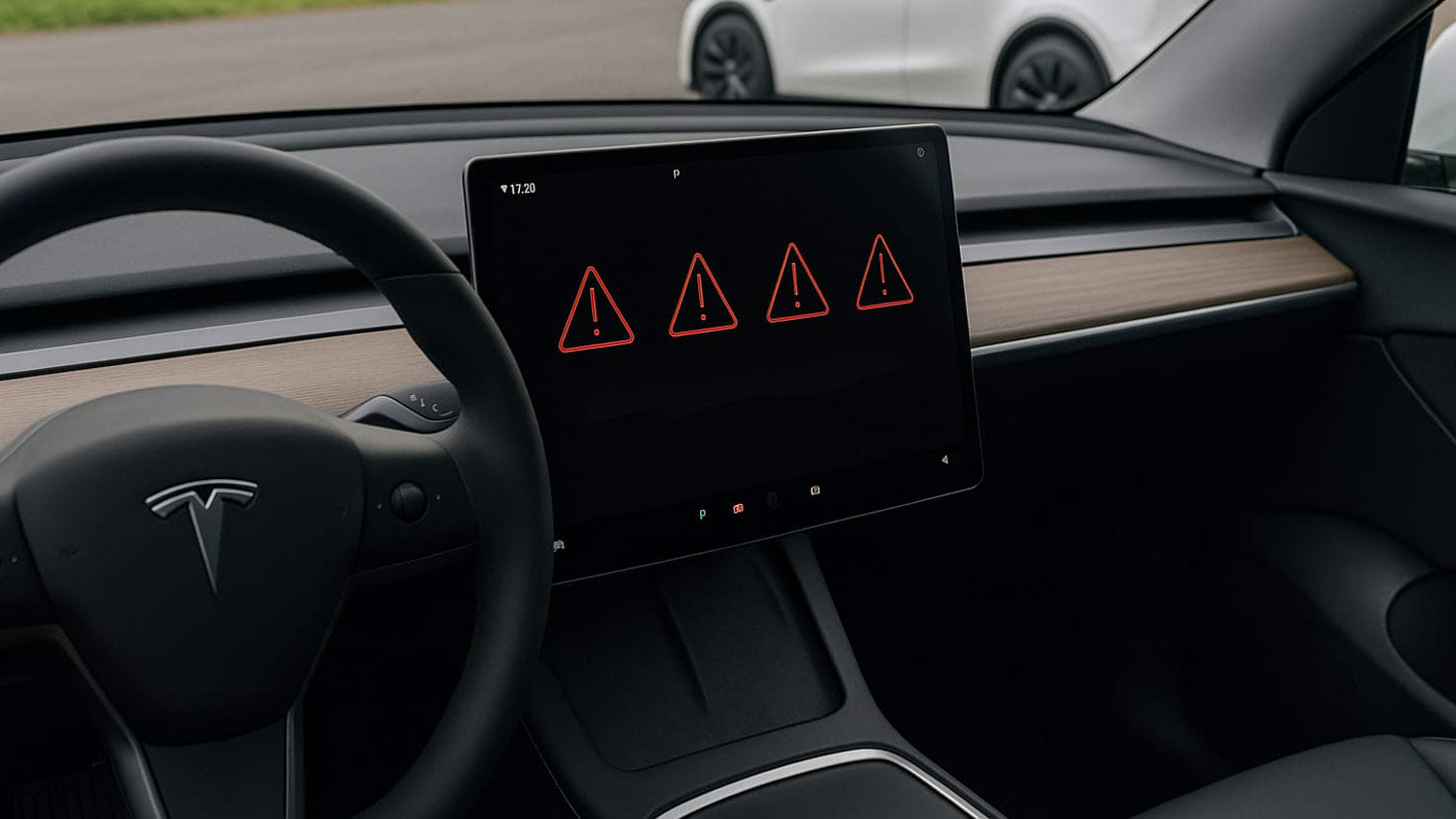
| Warning message "Refill washer fluid"? | Yes | > refill (all models hold 4 liters) |
| Can you hear the pump? | No | > Check the electrical system/pump (see below) |
| Water is running away from under the car? | Yes | > Check hose connection |
Problem 1: Nothing is happening at all.
-
Pump silent?
-
Check fuse (on-board power supply F115)
-
Check the pump's electrical connector (located in the right wheel arch).
-
If the pump is defective, only replacement will help – book a service appointment in the app.
-
-
Hose has slipped off or is leaking
The connection point is located under the cover on the driver's side wiper arm. If the hose is no longer securely attached, simply reattach it or secure it with a clamp. -
Line frozen
At temperatures around 0 °C, residual drops will freeze at the hose tip. Place a hot water bottle or lukewarm water on the hose, then refill with antifreeze (down to -20 °C).
Problem 2: Too little water or just a trickle.
The most common reason is a throttle/check valve at the end of the hose: a small round piece of plastic that severely restricts the flow.
Many drivers with this problem have removed it and replaced it with a simple connector – this results in an even film of water in front of the wipers. The procedure takes five minutes and requires only a plastic lever tool.
Other causes:
| Caused | Solution |
|---|---|
| nozzles clogged by dirt particles | Flush the pipes, retrofit the windshield washer filter insert. |
| Air in the system (after running dry) | Hold lever for 10-15 seconds, pump will self-prime. |
| incorrect mixing ratio | Dose summer/winter concentrate according to the season |
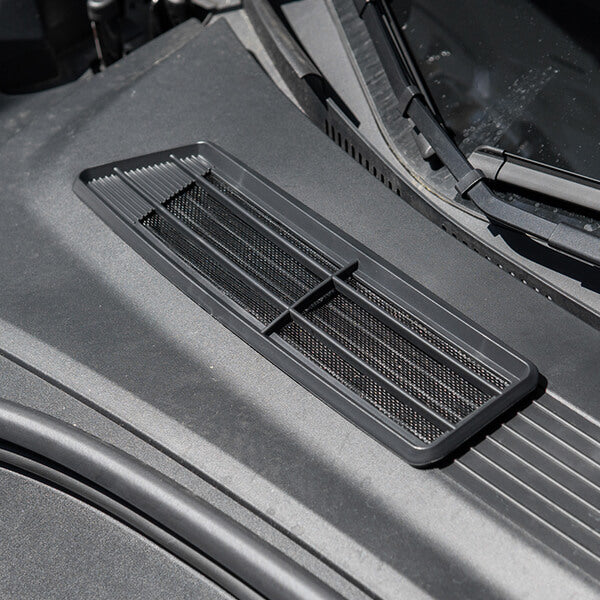
Tip: A Aluminum filter insert (Available from Teslabs) retains foreign objects and prevents future blockages.
Step-by-step instructions: Checking the windshield washer system
-
Push the lever all the way down and hold for 3-4 seconds.
-
Is the pump audible? – Yes → proceed to point 3; No → Check fuse/pump may be defective.
-
Open the frunk and check the hose connections.
-
Flow too weak? – Remove the restrictor or flush the line.
-
Line clear, but still weak? – Pump not delivering enough water → Service required.
-
Finally, calibrate: Move the wipers electrically to the home position, then test again.
When should I go to the service center?
-
after pump replacement or electrical faults
-
if no water is pumped despite checking the hose/nozzle
-
in case of a leak in the wheel arch (container) or a crack in the hose assembly
- Learn more here, How to book a Tesla service appointment.
Prevention and care
-
Use quality cleaners with antifreeze all year round
-
Empty and refill the container completely every three months.
-
Use a filter insert to keep particles out.
-
Flush through for 30 seconds at least once per season (hold lever).
If you still notice streaks on your windshield despite a functioning windshield washer system, it could mean that it's time to change the wiper blades.
High-quality, low-noise Windscreen wiper blades For perfect visibility, look no further than Teslabs for your Model 3 or Model Y.
Conclusion
Often, a "defective" windshield washer system is simply hampered by a loose hose, a restrictor valve that's too tight, or just air in the system. With the checks mentioned above, you can usually get your Tesla's windshield clear again in just a few minutes – and thanks to the filter, you'll also protect it from clogged nozzles and wiper wear in the long run.
Did you also have problems with the windshield washer system? Feel free to share your experiences in the comments.