
Correct tire pressure is an often underestimated but crucial factor in the operation of an (electric) car. Not only safety and driving comfort, but also efficiency and therefore range depend on the correct tire pressure.
In this article we will examine, What is the optimal tire pressure for Tesla Model 3 and Model Y?, which monitoring methods exist and how you can fix possible errors.
What tire pressure is needed for a Tesla Model Y?
First things first: Tesla's tire inflation recommendation is based on the specific vehicle model, not the tires actually fitted. You can find the manufacturer's recommended pressures on the sticker located on the B-pillar (driver's side). – For Model 3 and Y, it is generally 2.9 bar.
It is recommended to increase this value by 0.1 to 0.3 bar for winter tires. This is due to the often different rubber compound and the typically lower operating temperatures.
The colder the air in the tire, the lower the pressure. – As a rule of thumb, there is a loss of 0.1 bar per 10 degrees temperature difference. Overfilling the system directly prevents temperature-related pressure loss.
Slightly higher pressure should be used not only for winter tires, but also for larger rims (e.g., 20 inches on the Model 3 Performance). This is because the tire sidewall is smaller and is stabilized by the slightly higher pressure.
Tesla tire pressure check
Tesla installs tire pressure sensors in the Model 3 and Model Y, which provide the TPMS (Tire Pressure Monitoring System) with data about the current pressures in all four tires.
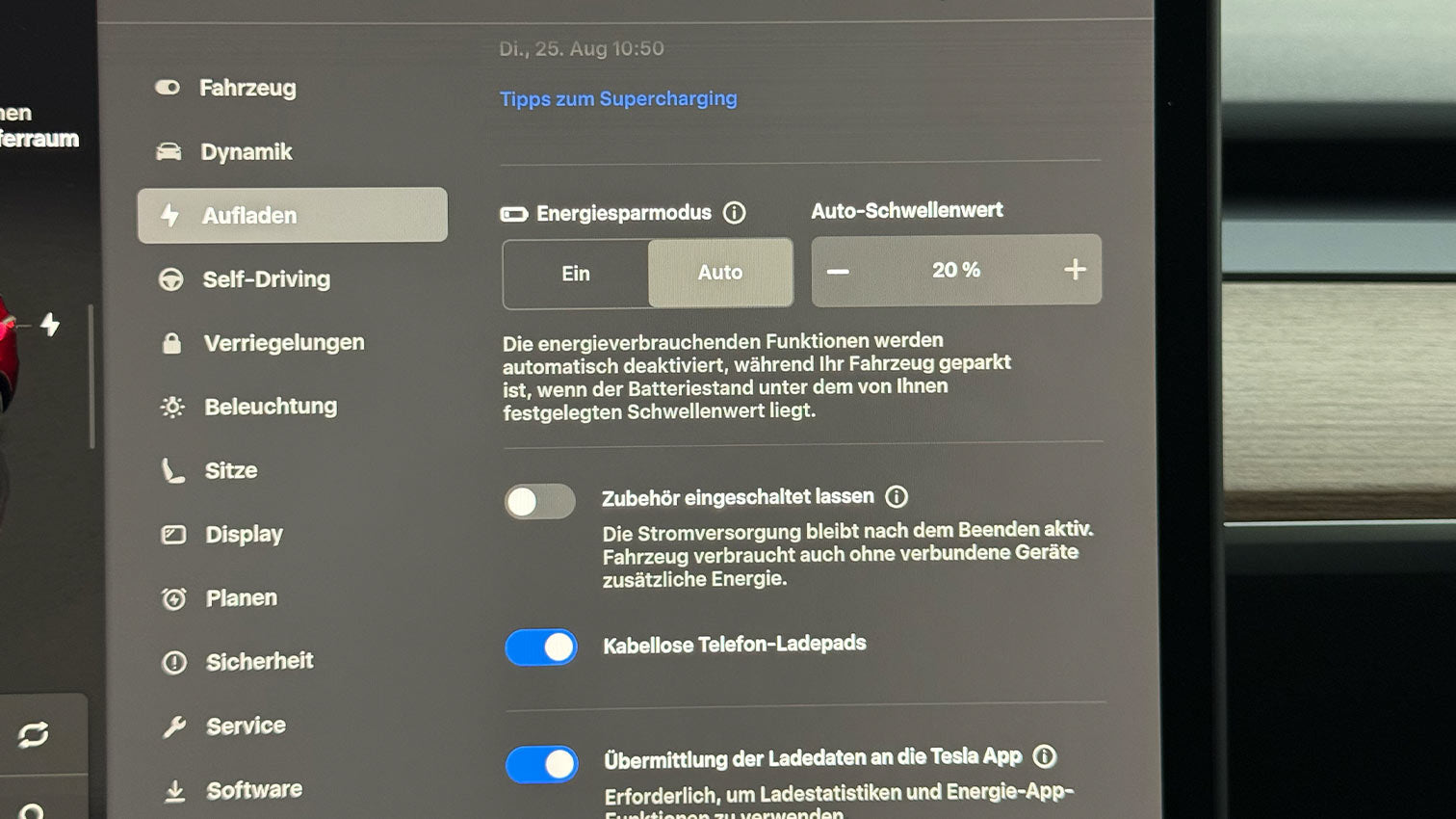
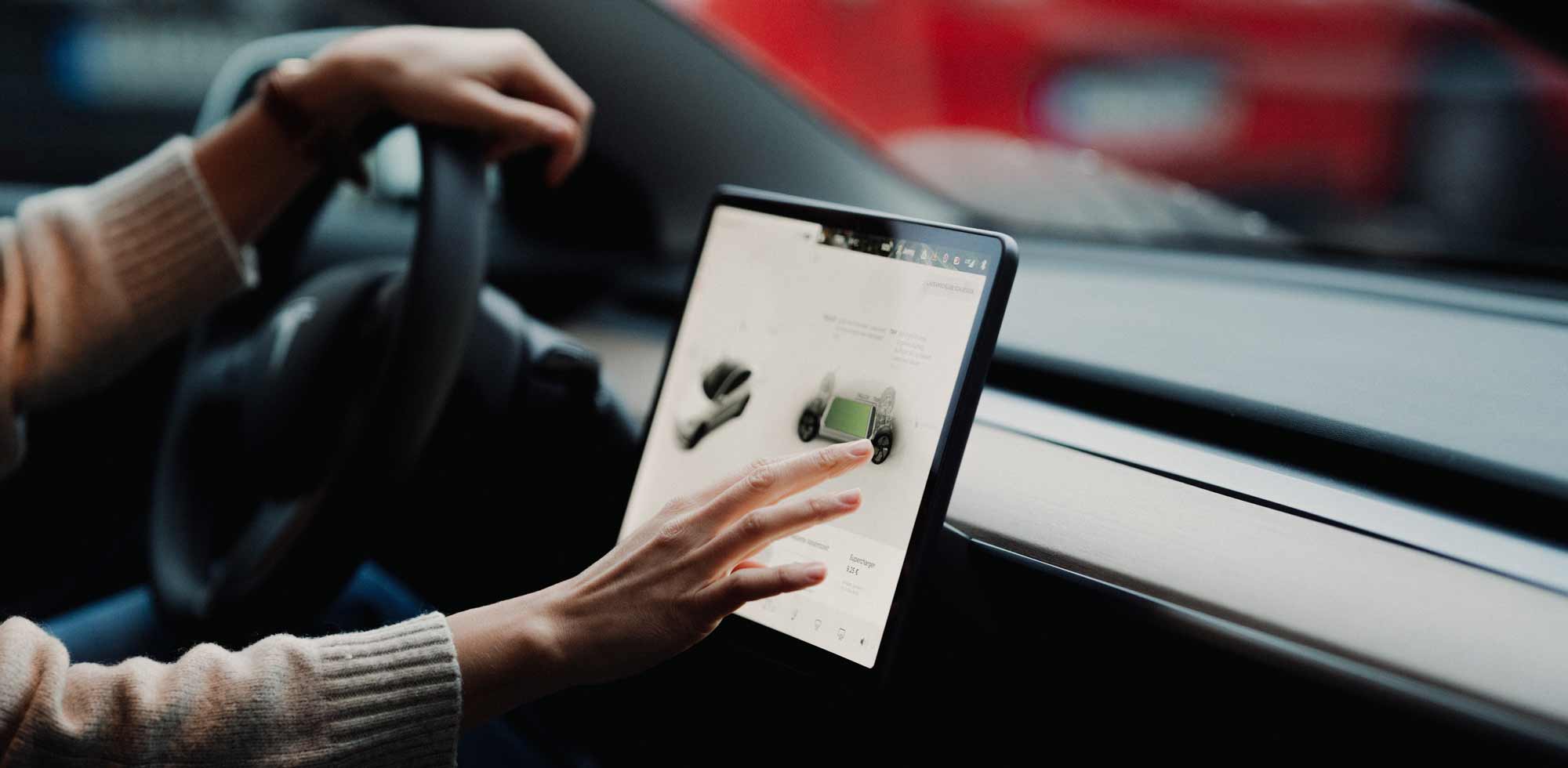
These can then be displayed on the infotainment screen under Vehicle -> service The values are displayed, eliminating the need for cumbersome measurements at the valve. When reading these values, always ensure the tires are cold and have been stationary for a few hours.
The TPMS automatically detects excessively high or low values and warns the driver accordingly. However, such a warning should always be checked for plausibility. – after all, no sensor lasts forever; at some point, it will start displaying incorrect values or no values at all.
In such a case, you will find a quick and easy solution at Teslabs: Our BLE Tesla tire pressure sensors Available for retrofitting as a single unit or in packs of four.
Tire pressure – factors
The ideal tire pressure for Model 3 and Y ensures greater safety, range, and comfort. Around 2.9 bar is rarely a bad choice, but slightly higher pressure is recommended in winter, with larger rims, or when towing a trailer.
In principle, you can rely on the Tesla TPMS, but checking the displayed values by measuring at the valve (even if it's just out of curiosity) never hurts.
What experiences have you had with Tesla tire pressure? Let us know in the comments.